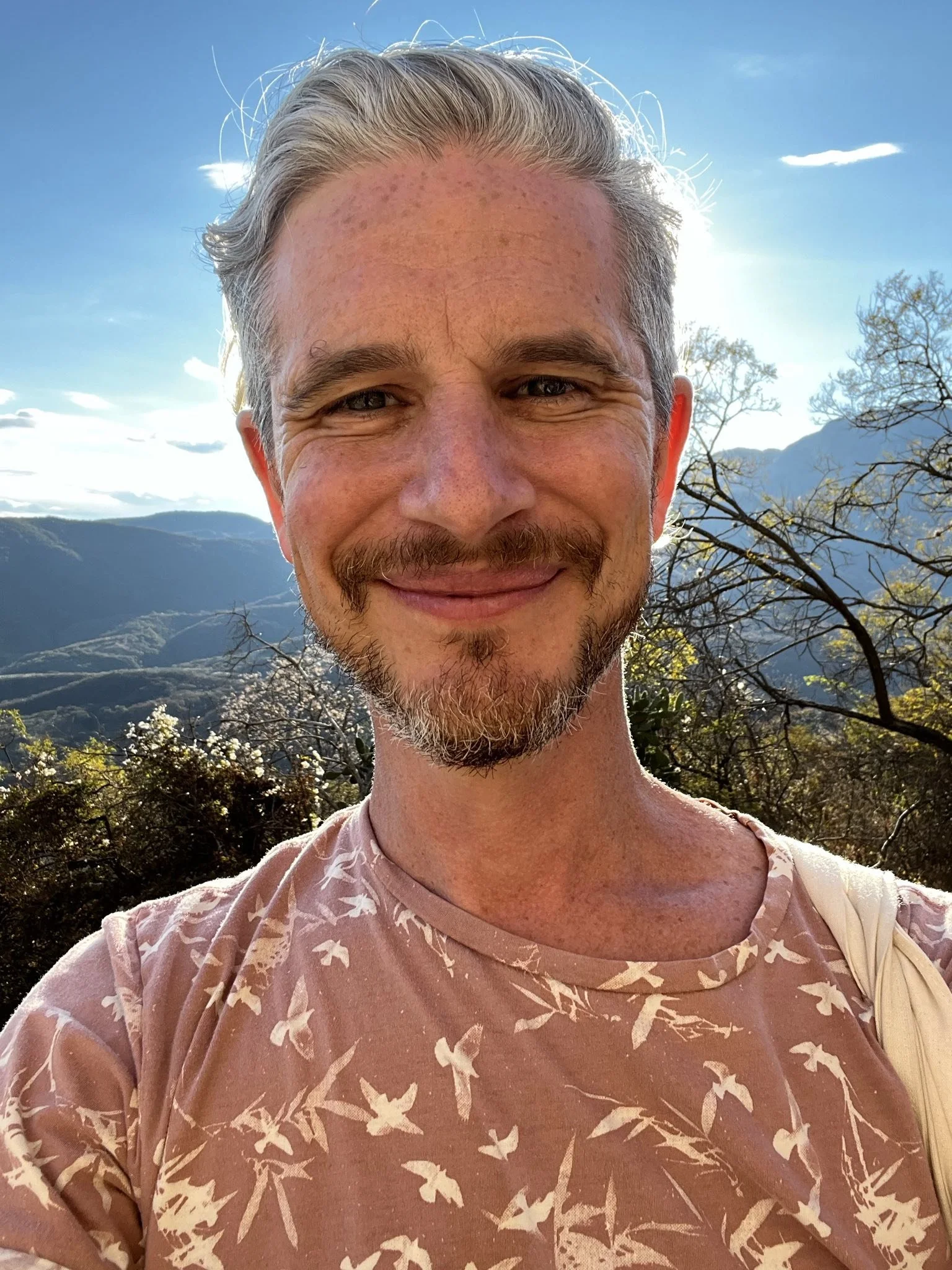
I know what it is to hide yourself.
And I know what it costs.
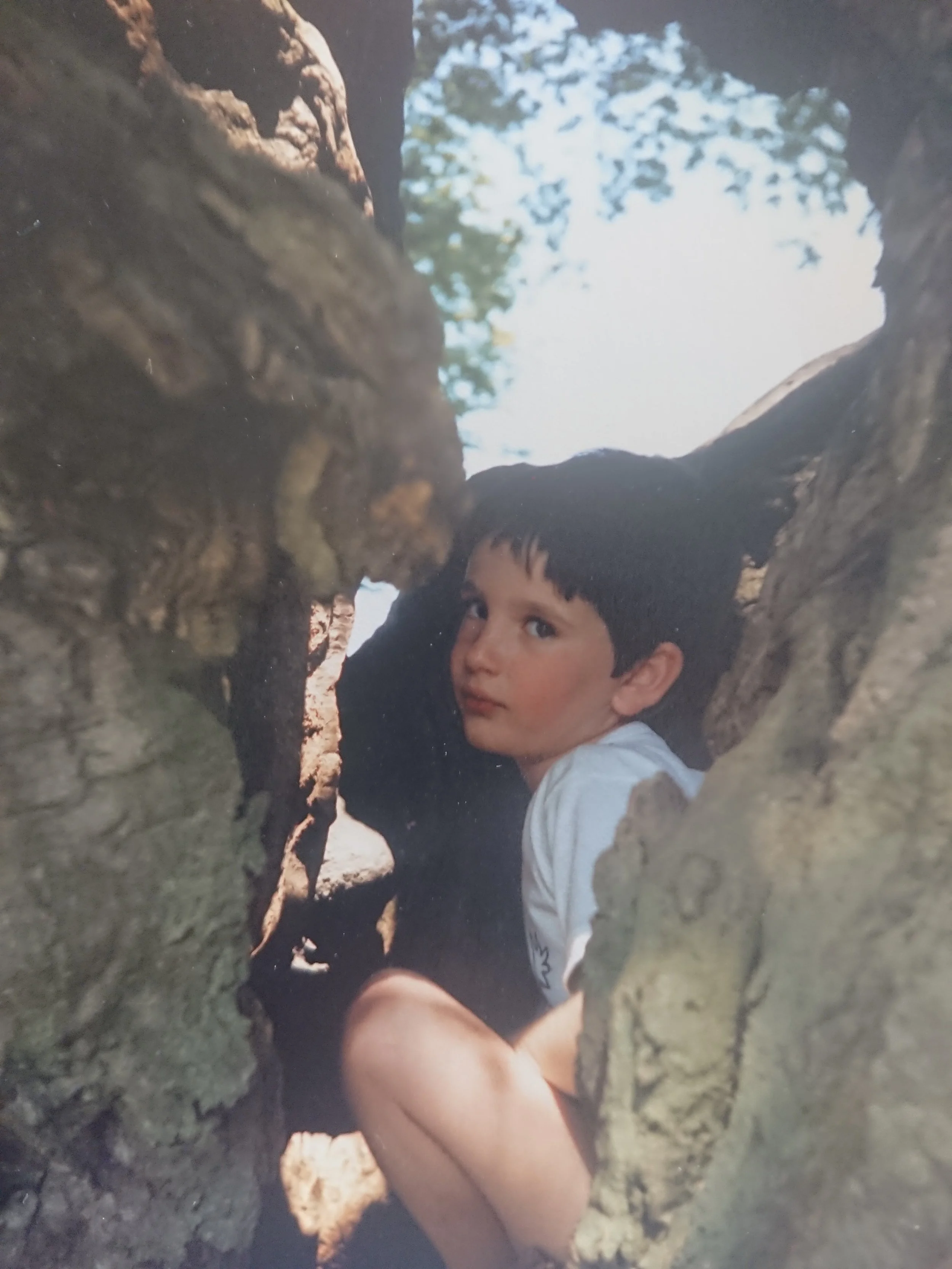
I grew up in London — shy, self-conscious, and convinced I was too much and not enough at the same time. There were these bursts of aliveness I couldn't quite hold, followed by long retreats into my own world. I learned early that showing up was dangerous: at school, exuberance got me ridiculed; at home, only certain versions of myself were welcome. So I made myself smaller. I got very good at disappearing.
My sexuality arrived young, and with it, a bone-deep understanding that this particular part of me was not okay. This was the late eighties. There were no words for it in my world, no one who looked like what I was becoming. I filed it away and got on with things.
What saved me, repeatedly, was creativity. Theatre in particular. From the age of eleven I was completely certain: this was where I belonged. Not just because of the stage, but because of what happened in the rehearsal room, the way a group of people could drop their armour and make something together. That felt like the most alive thing in the world.
The work that prepared me
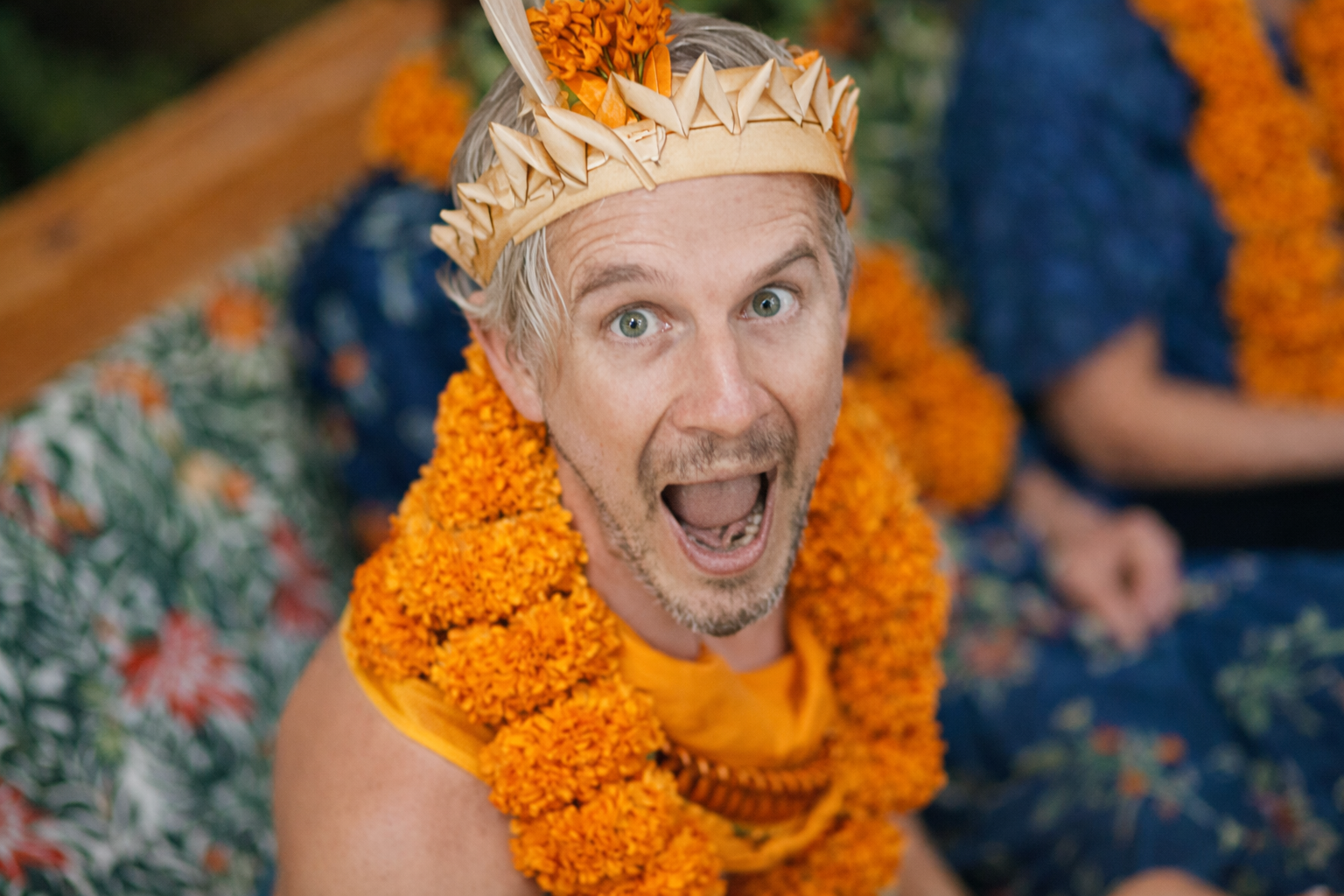
I trained as a theatre maker and spent thirteen years running Root Experience, a company focused on transformational interactive theatre, working with children, with schools, with people living with chronic pain, autism, and mental health conditions. The through-line in all of it was improvisation: learning to let go of the need to be right, to be safe, to be in control, and to trust what emerged instead.
I got very interested in how you create the conditions for that — how you build a container strong enough that people feel safe enough to actually arrive. I trained actors to open themselves into pure improvisation. I learned to read rooms, to sense what was available and what was closed. Working with children, you learn fast: you can't force exuberance, you can only make it safe enough to appear.
I realised I was never interested in the performance. It was always the process — being in the room as something opened up in people.
When the company reached the point where its next step was strategy, fundraising, and governance, I realised something important: the dream I had been living belonged to an eleven-year-old. I had actually lived it. What I wanted now was to go deeper as a facilitator, not wider as a director. So I let the company go. And spent a couple of years not quite knowing who I was without it.
The Reckoning
In that pause, something else surfaced. I had spent most of my adult life keeping queer community at a careful distance — a few long-term relationships, a lot of anonymous sex, and almost no gay or queer friends. Gay men frightened me. As a teenager, I had lived in terror of being exposed and that fear had quietly hardened into a wound I carried for decades without fully naming it. What I was most drawn to was also what I most avoided.
Sex had always been a place of genuine freedom for me — somewhere I could be fully myself, take up space, be too much. But this co-existed with a deep discomfort around queer community itself. Looking back, I can see how confusing that was to carry. The pleasure was real. So was the fear.
What followed was a genuine reckoning. Deep inner work, therapy, and a slow, sometimes frightening immersion into queer community. A festival in Berlin in 2018 brought me into a world I had been circling for years. Work on the internalised shame I had been carrying — the parts of me that had quietly learned to be almost disgusted by my own desire. It took time. It was worth it.
The work I do now came directly from the work I did on myself. It wasn't theory first. It was lived, and messy, and mine.
How the work found its shape
I started noticing something: the things that had freed me most weren't the ones that told me who to be or what to feel. They were the containers — a dance floor, a kink scene, a somatic session — where I got to discover something for myself. Where nobody was explaining me to myself. Where I could just arrive and see what was there.
So I started building those containers for other people. I'd have an idea “what if people moved slowly with each other, touched without agenda?” and I'd put it in a room and watch what happened. Then I'd take what I learned back into my own life, my own body, my own relationships and it would loop back into the work. This isn't something I do from a distance. I'm in it too. That hasn't changed.
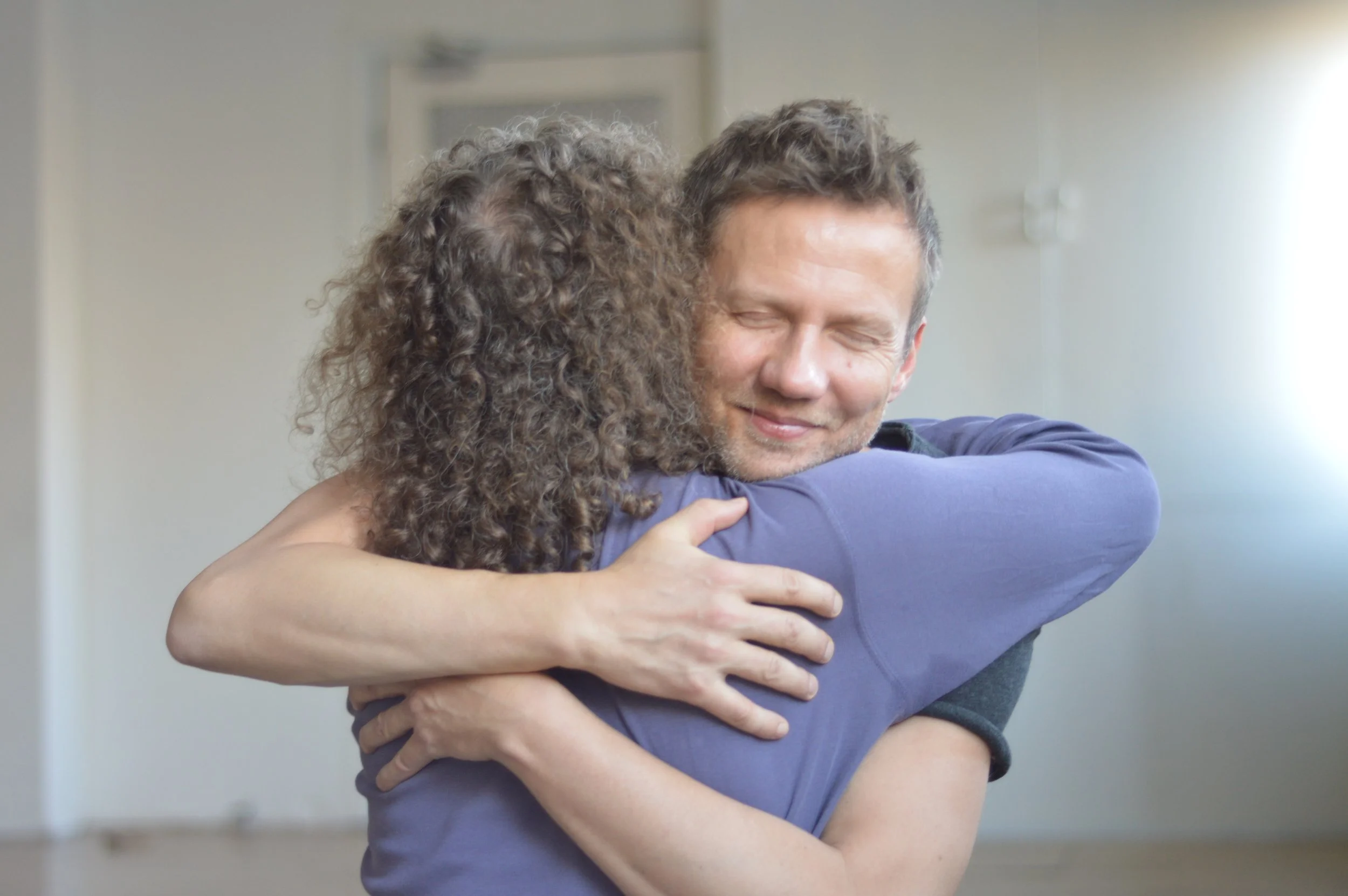
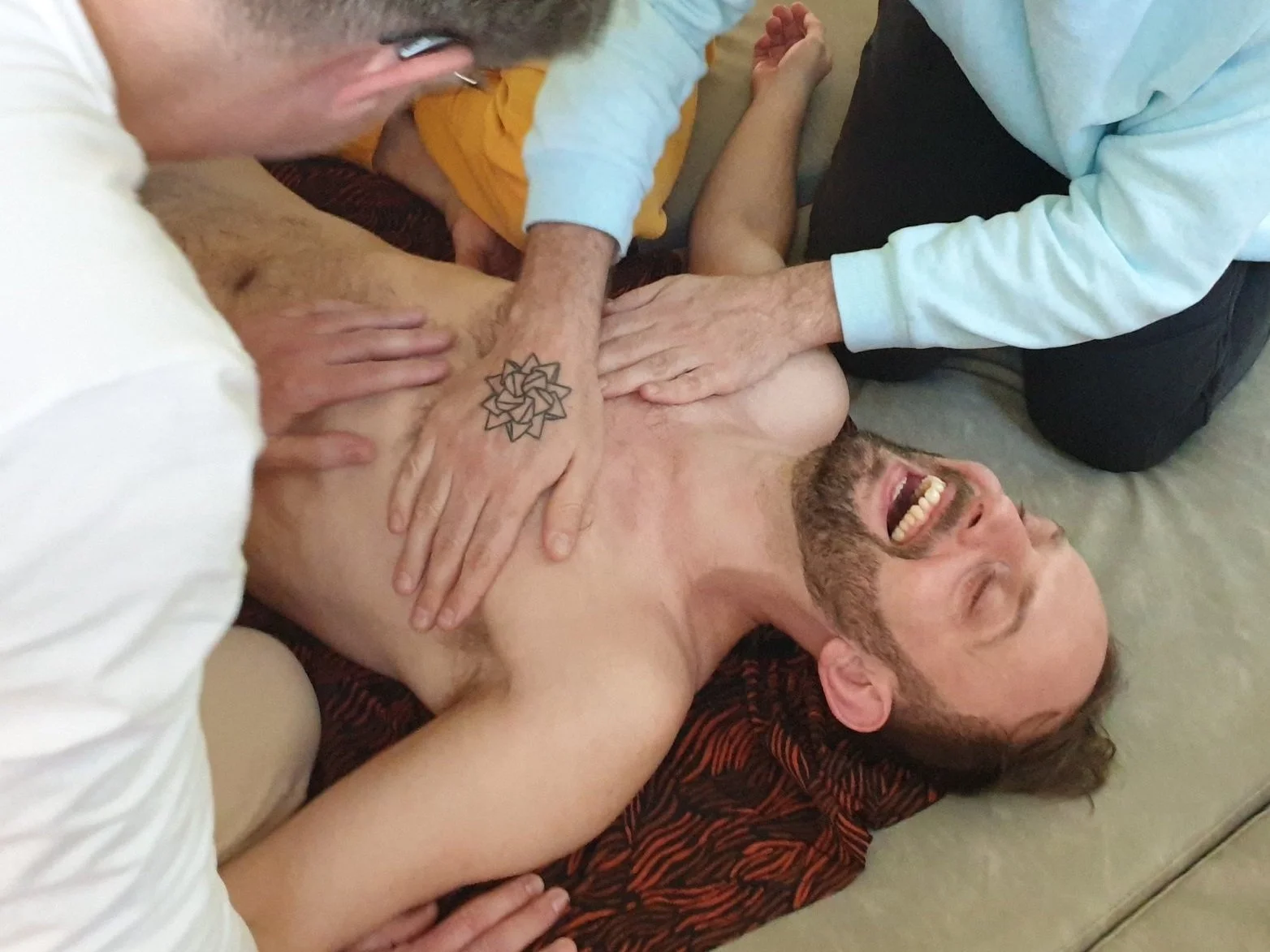
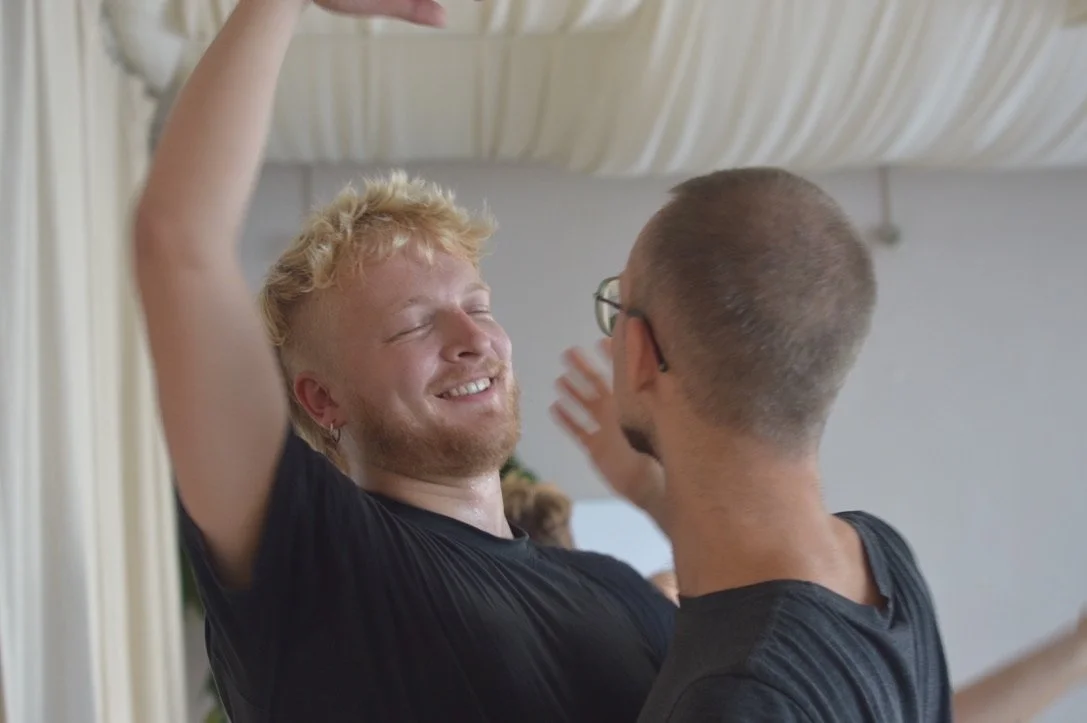
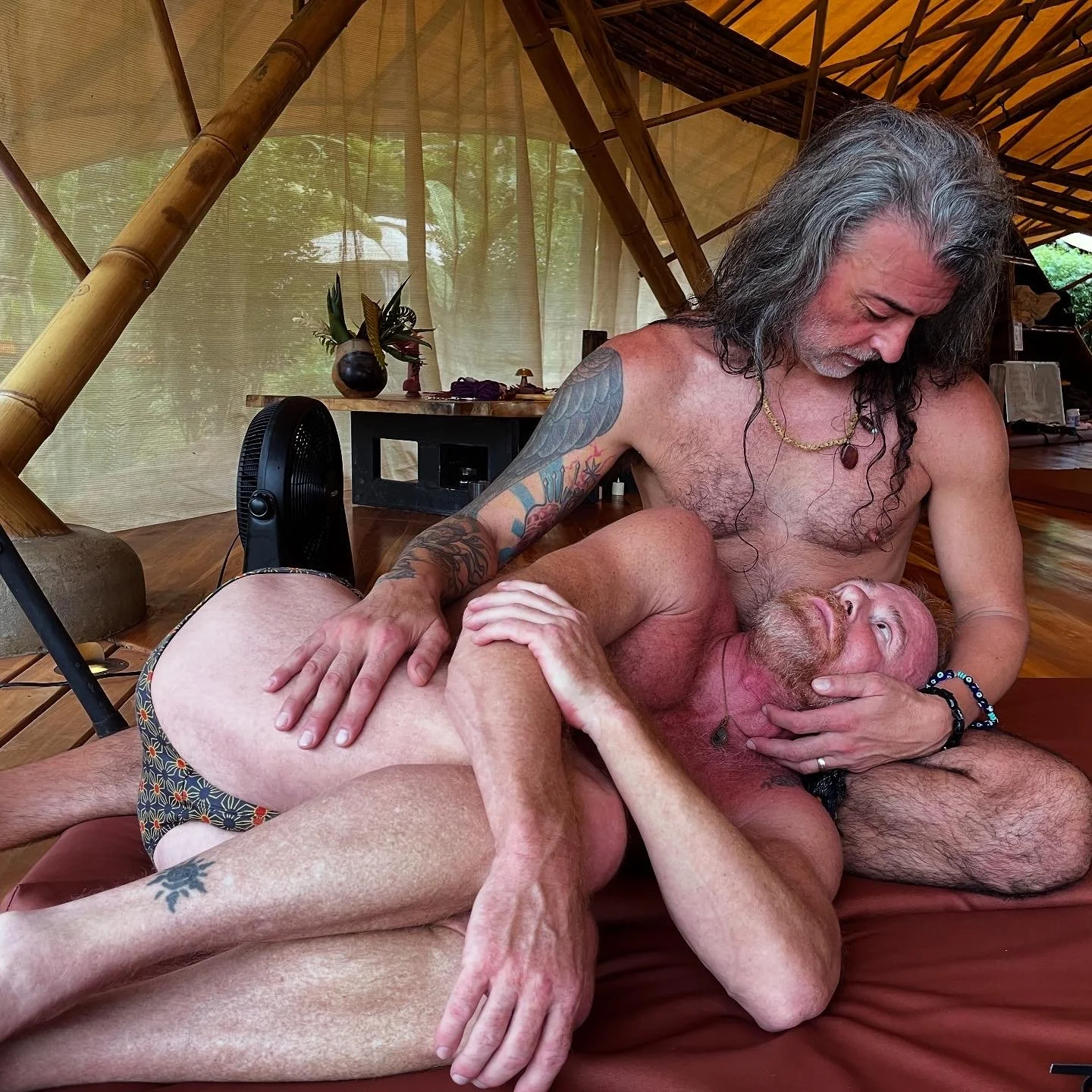
What I see, again and again, is queer people — mostly men — exhausted from performing. Scanning every space for signs of rejection. Unable to stop being in judgement of themselves. Some withdraw from communal life entirely; others push through it on drink or drugs or sheer force of will. Underneath the exuberance of our community, there is often a hunger for something slower and more honest.
What I have come to believe, and what I have seen play out, room after room, is that the most powerful thing is not to tell people what they should feel or who they should become. It is to create the space where they can find out for themselves. To offer movement, ritual, touch, play and genuine permission. To hold the container steady while something real has a chance to emerge.
I can never tell you exactly what you'll get from one of these spaces. I can only tell you that I will be fully present in the room with you — and that what's there for you will have room to arrive.
What I notice in the room
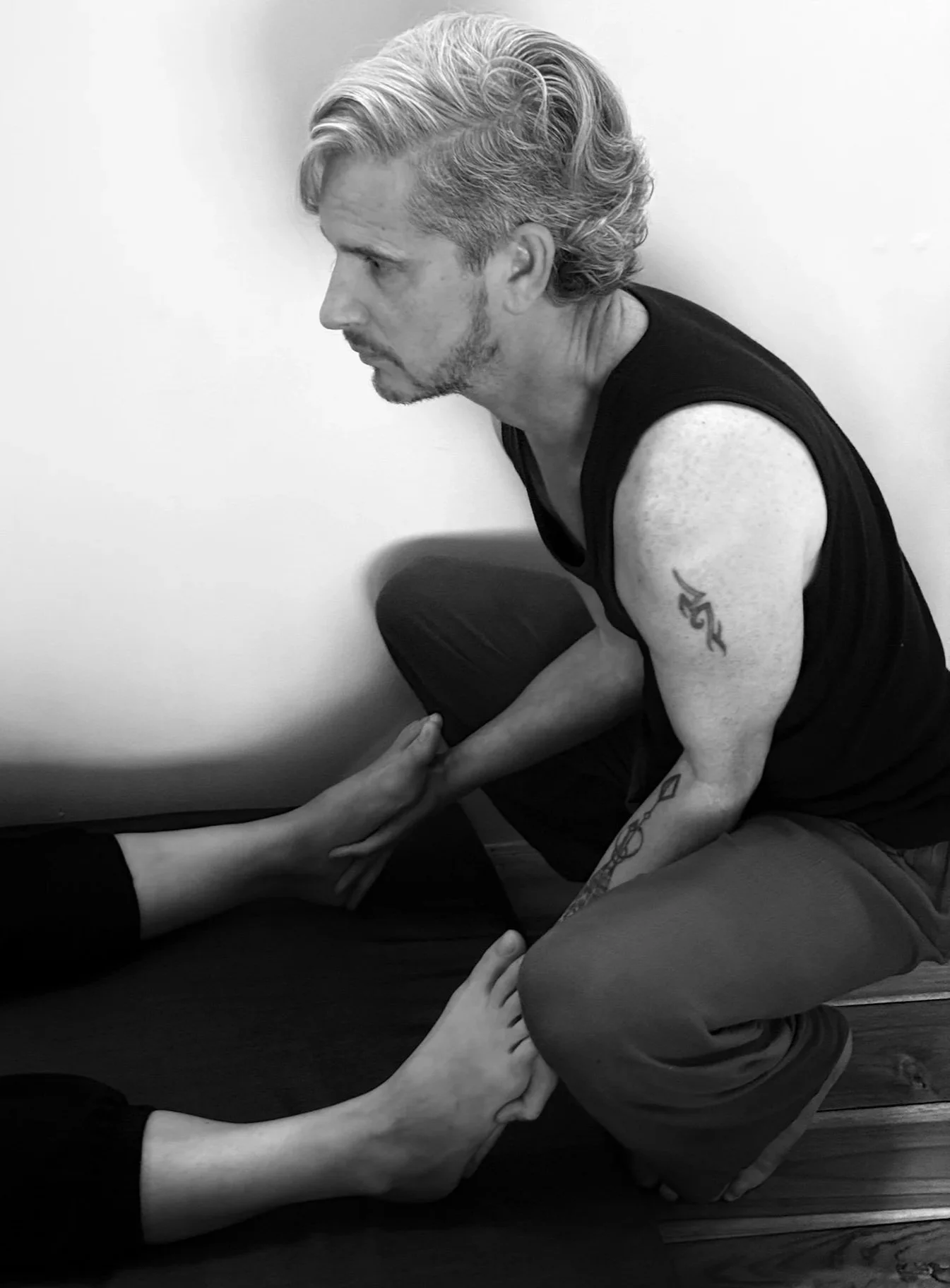
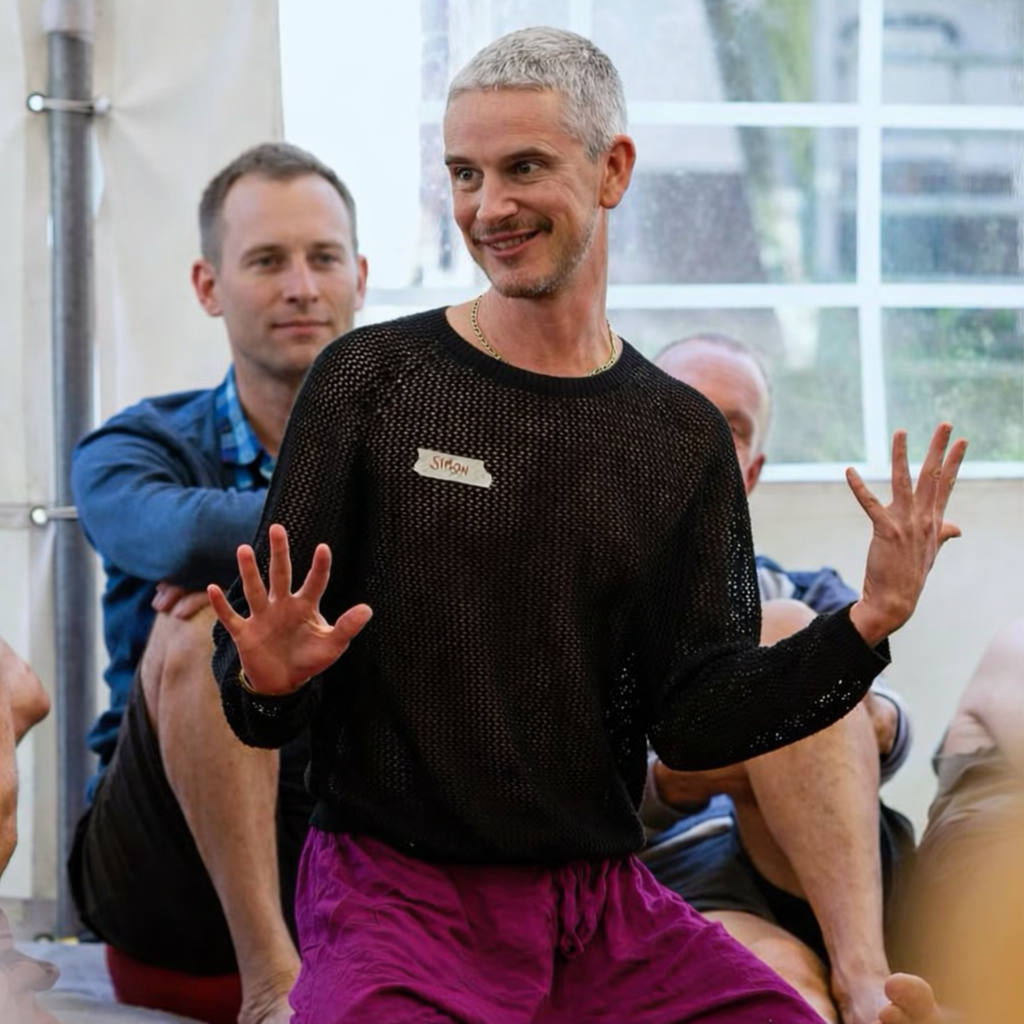
My facilitation draws on a wide range of training and lived practice — theatre-making and ensemble process, somatic and body-based work, conscious sexuality and kink, erotic embodiment, ecstatic dance, and intimacy facilitation. I currently also facilitate alongside the Sapience somatic practice community, and am based in Amsterdam, working across Europe.
Twenty years in the room
THE WORK, IN BRIEF
Queer dance spaces rooted in presence, pleasure, and community. DJ sets woven from decades of music.
Conscious kink, intimacy, touch, power dynamics, and embodiment for gay, bi and queer people across Europe.
Available for festivals, retreat programmes, and events seeking experienced embodiment and intimacy facilitation.
One-to-one support for practitioners developing work in intimacy, kink, or somatic spaces.
IN CONVERSATION
Hear the work spoken aloud
Sometimes the best way to understand what this work is — and isn't — is to hear it described in real conversation.
In this podcast Wil Fisher and I are in a conversation on sacredness, presence, play, sexuality, surrender and self-discovery. Exploring how improvisation and intimacy share the same essential ingredients, and why reverence, curiosity and embodied presence can open the door to more freedom, peace and aliveness.
If something in this resonates, if you recognise yourself somewhere in this story, have a look around.
The work is here. So am I.